Amy travels to Europe
Little WomenAmy Curtis March’s European journey is a turning point in her development from a gifted, self-conscious girl into a more disciplined artist and adult woman. She leaves America expecting Europe, especially Rome, to test her artistic powers, but the journey also reveals a changed moral temper: the traveler who once defined herself through possessions, appearance, and social distinction increasingly learns to observe carefully, work steadily, and judge her ambitions by what they can produce.
The Call to Travel
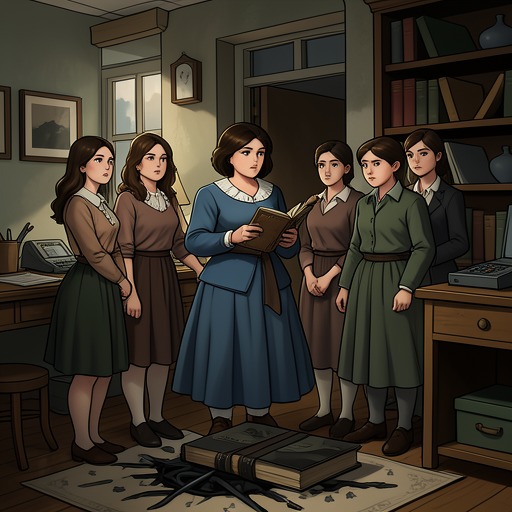
Aunt Carrol’s letter creates the opportunity when she announces that she will go abroad and wants Amy to accompany her. Jo initially assumes that the invitation is meant for her and erupts in delighted expectation, only to discover that Amy has been chosen. The reversal makes the journey emotionally complicated before Amy even departs: it is Amy’s good fortune, but also one of Jo’s sharpest disappointments. Jo resolves to imitate Amy’s composure by trying not merely to appear glad but to become glad, and by the time Amy returns to the family celebration she can participate without openly resenting her sister’s success.
Amy receives the news as a summons rather than a casual holiday. She immediately sorts her colors and packs her pencils, while leaving clothes, money, and passports to other people. Her priorities expose both her absorption in art and the limits of her youthful idealism. She insists that the journey will decide her career: Rome, she believes, will disclose whether she possesses genius and will give her the chance to prove it. Europe therefore functions as an artistic threshold, a place where aspiration must meet judgment, practice, and the visible achievements of earlier masters.
Crossing the Atlantic and Seeing the Old World
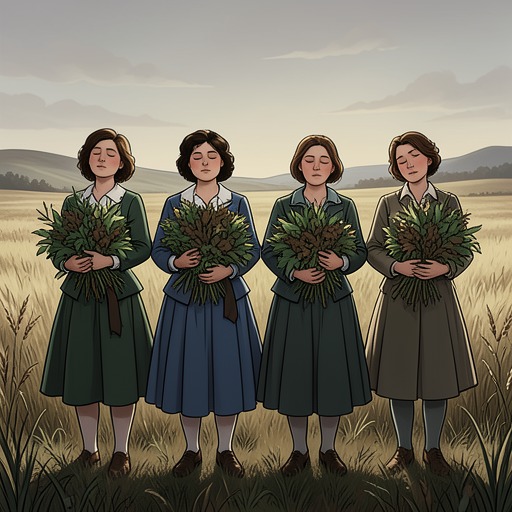
Amy sails toward Europe while her father and friend watch from the shore, hoping that gentle fortunes will accompany the happy-hearted traveler. The departure is presented as a literal separation from home and as an enlargement of experience. Amy waves until the watchers can see only summer sunshine dazzling on the sea, an image that joins affectionate family attachment to the widening horizon of her ambition.
Her first surviving account comes from London, where she writes from a front window of the Bath Hotel on Piccadilly. The letter is lively but self-aware: because she cannot narrate everything, she offers selections from her notebook, explaining that she has done little but sketch and scribble since beginning the tour. The notebook and sketchbook make travel an exercise in artistic attention rather than mere sightseeing. She records the Atlantic crossing as well, recalling that she felt miserable at Halifax but afterward traveled delightfully, spent much of the day on deck, and enjoyed the company and kindness of the officers and other passengers.
Amy’s descriptions also reveal her pleasure in movement, spectacle, and social life. She delights in walks on deck, sunsets, air and waves, and compares the ship’s rush to the excitement of riding a fast horse. At the same time, her letters remain connected to home: she wishes Elizabeth March could have shared the voyage and imagines how Josephine March would have climbed into dangerous places, befriended the engineers, and used the captain’s speaking trumpet. Even at a distance, Amy measures the world through the distinctive personalities of her sisters.
London, Paris, and Artistic Education
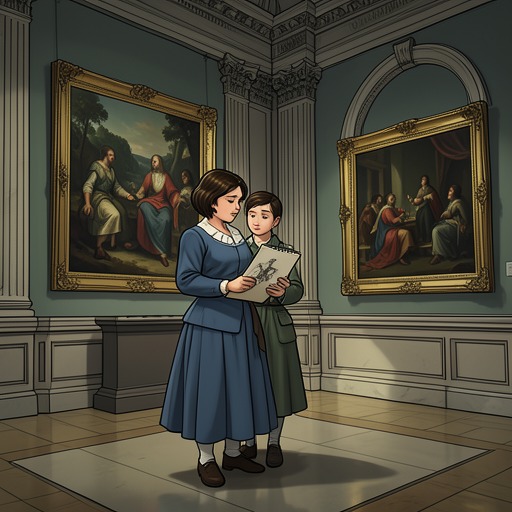
In London, Amy enjoys parks, theaters, new gowns, and the attention of elegant men, joking that the experience makes her feel like a dissipated London fine lady. Yet her account is more than a catalogue of pleasures. She records visits to Hampton Court and the Kensington Museum, finding the collections of paintings more absorbing than anything else. At Hampton Court she sees Raphael’s cartoons; at the museum she encounters works associated with Turner, Lawrence, Reynolds, Hogarth, and other celebrated artists. The journey thus places her own ambition within a history of art that is both inspiring and intimidating.
The Vaughns contribute to the social dimension of the tour. Amy reports that they made pleasant parties for her in London, and she praises their hospitality, noting that English people may be slow to admit outsiders but are exceptionally generous once they do so. A picnic in Richmond Park gives her splendid oaks, groups of deer, a nightingale, and larks to observe and copy. Her response combines social enjoyment with the habits of an artist: landscape is not simply consumed but studied as material for representation.
From Paris, Amy writes again to her sisters, carrying forward the epistolary structure of the journey. The transition from London to Paris emphasizes the breadth of her itinerary and the speed of her education. She tells her family that the Vaughns hope to meet the party in Rome the following winter and that she will be bitterly disappointed if they do not. Her excitement is therefore attached not only to monuments and pictures but also to renewed companionship and the prospect of a more extensive European social world.
The Discipline of Observation
Amy’s most important development during the journey lies in the method she adopts. Before leaving Germany and Switzerland, she explains that she keeps a diary and tries to remember correctly and describe clearly everything she sees and admires, following advice from her father. The diary and sketchbook become practical instruments of self-correction. They force her to distinguish impression from observation and enthusiasm from accurate description.
This discipline extends the moral education that began before her departure. At school, she had broken the rules by bringing pickled limes, lost the treat, and was required to hold out her hand for punishment. Her mother did not excuse the disobedience, although she rejected the humiliating form of corporal punishment and warned Amy that conceit could spoil talent. Later Amy identifies selfishness as the largest item in her personal “bundle of naughties” and decides to work against it, using a ring as a visible reminder of her resolution. Her father observes the change in concrete behavior: she runs errands, gives Margaret March her place, waits on others patiently and cheerfully, avoids excessive attention to the mirror, and does not even mention the pretty ring she wears. He concludes that she is learning to think of others more and herself less, and that she is shaping her character as carefully as her clay figures.
Europe does not erase Amy’s taste for beauty, society, or distinction, but it gives those impulses a more demanding framework. Her artistic ambition must now be supported by looking, recording, comparing, and practicing. Travel becomes a form of moral and professional apprenticeship: the same girl who once wanted admiration for her accomplishments is being trained to let sustained work give those accomplishments value.
Distance, Family, and Narrative Significance
The journey separates Amy from the household at a vulnerable time. Before she leaves, she entrusts her sisters to Laurie, asking him to care for them and to comfort them if anything happens. Laurie promises, not knowing that he will later be called upon to keep his word. Amy’s departure consequently carries an undertone of uncertainty: she is entering a beautiful and promising world while the family remains exposed to illness, grief, and change.
That contrast grows more severe when Elizabeth March’s health declines. Beth’s faith enables her to accept the approach of death with patience, while Jo struggles against the loss and insists that she will work and pray to prevent it. Amy is abroad as the family’s emotional world is transformed, and her letters preserve a line of communication across the separation. The European correspondence therefore does double work: it records Amy’s artistic education while keeping her present within the family narrative.
The journey’s significance is ultimately larger than its itinerary. Amy leaves to discover whether she has genius, but the evidence of her growth lies equally in the habits that accompany the search: attention, memory, clear description, gratitude for hospitality, loyalty to her sisters, and a conscious effort to overcome selfishness and vanity. Europe enlarges her world, yet it also sends her back toward the central question of the March family’s education—how talent, beauty, and ambition can be shaped into a character capable of making life more beautiful for others.